
House Edge Explained: How Casinos Make Money
 Available in GB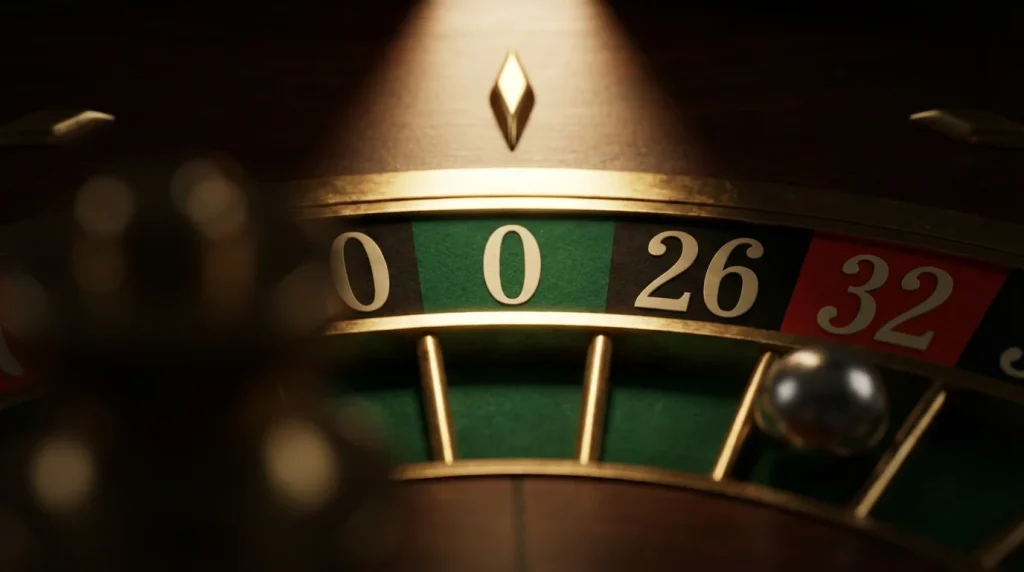
The House Edge: The Business Model Behind Every Casino Game
Casinos don’t need to cheat. They don’t need rigged games, weighted dice, or algorithms that adjust based on your balance. The house edge is the reason, and it’s elegant in its simplicity: every game is structured so that the odds pay slightly less than the true probability of winning. That gap — small on any single bet, relentless across millions of them — is how casinos generate consistent, predictable revenue from players who are winning and losing in unpredictable patterns.
The house edge is not a secret, and it’s not a conspiracy. It’s published, calculable, and understood by anyone willing to spend five minutes with the maths. Yet most casino players couldn’t tell you the house edge of the game they played last night, much less explain how it translates to real-money cost over their playing history. That gap between availability and understanding is where bad decisions live — choosing American roulette over European, playing slots at 88% RTP when 97% alternatives exist on the same site, or chasing bonus clearance on high-edge games that mathematically guarantee a net loss.
This guide explains what the house edge is, how it’s calculated across different game types, and how it relates to the RTP percentage you see published on every slot and table game at UK casinos.
Top online casinos in the UK
- SlotoSportBonus: 500% up to £ 10 200+ 777 FS · Payout speed: 1-3 business days
- BritsinoBonus: Welcome Package – Get your £2,200 + 2,000 FS · Payout speed: 1-3 business days
- JetsetspinsBonus: 200% Bonus + 100 Free Spins + Free Royal Wheel · Payout speed: 1-3 business days
- BeOnBetBonus: 100% up to €500 + 100 FS · Payout speed: 1-3 business days
- DieselwinBonus: Welcome Pack 250% up to £4000 + 200 FS · Payout speed: 1-3 business days
- AmunbetBonus: Join now and get 450% up to 2,700 GBP + 450 FS · Payout speed: 1-3 business days
- SpinFormulaBonus: 550% Up To £15,000 + 550 FS · Payout speed: 1-3 business days
- Revery PlayBonus: 100% up to€1,000+ 100 FS · Payout speed: 1-3 business days
- x3betBonus: Welcome Pack 100% Up to £1.000 + 200 Free Spins · Payout speed: 1-3 business days
- ZombillionBonus: Welcome Pack 250% up to £4000 + 200 FS · Payout speed: 1-3 business days
What the House Edge Is and How It Works
The house edge is the mathematical advantage the casino holds on every bet you place. It’s expressed as a percentage of your wager that the casino expects to retain over the long run. A 2.70% house edge means that for every £100 you wager, the casino expects to keep £2.70 and return £97.30 to you. That £2.70 isn’t deducted from a single bet — it’s the average outcome across a vast number of bets, with individual results fluctuating above and below the line.
The mechanism varies by game but the principle is constant: payouts are set at slightly less than the true odds of winning. In European roulette, for example, there are 37 numbered pockets on the wheel (0-36). A straight-up bet on a single number pays 35 to 1. If the odds were fair — paying at the true probability — the payout would be 36 to 1. That difference between the 35:1 payout and the 36:1 true odds is the house edge. It works out to 1/37, or approximately 2.70%, and it applies identically to every bet on the European roulette table, regardless of whether you bet on a single number, a group of six, or red/black.
In blackjack, the house edge emerges differently. The dealer and the player follow asymmetric rules: the player acts first, and if the player busts (exceeds 21), they lose immediately — even if the dealer would have busted too. This fundamental asymmetry gives the house a natural advantage. Basic strategy reduces that advantage to around 0.5% by making the mathematically optimal decision on every hand, but it can never eliminate it entirely because the structural bias of “player busts first” persists.
For slots, the house edge is determined by the game’s paytable and reel configuration. The combination of symbol weightings, payline structures, and bonus feature triggers produces a fixed mathematical return. A slot with a 4% house edge pays back 96% of total wagers over its operational lifetime. The player has no ability to influence this percentage — unlike blackjack, there are no strategic decisions that affect the outcome. You press spin, the RNG determines the result, and the game’s built-in maths ensures the return converges on the published figure over time.
The critical concept is expected value per wager. If the house edge is 3%, every £1 bet has an expected value of -£0.03 to the player. This doesn’t mean you lose 3p every time — most bets result in either a complete loss or a win that exceeds the wager — but the weighted average of all possible outcomes produces that 3p deficit. Multiply by the number of bets you place per session, and the expected loss becomes a tangible figure. At £1 per spin across 500 spins, a 3% house edge translates to a £15 expected loss. At £2 per spin, it’s £30. The maths scales linearly: double the bet, double the expected cost.
House Edge by Game: From Blackjack to Slots
Not all casino games are created equal in terms of house edge, and the variation across game types is substantial. Choosing a game with a lower house edge is the most effective way to reduce the cost of your play — more impactful than any betting system, staking plan, or bonus strategy.
Blackjack sits at the top of the list for player-friendly odds. With basic strategy and standard UK rules (six to eight decks, dealer stands on soft 17, 3:2 natural payouts), the house edge is approximately 0.4-0.6%. That makes blackjack the cheapest table game in the casino per pound wagered. Deviate from basic strategy, however, and the edge climbs rapidly — intuition-based play can push it above 2%, and poor decisions like always standing on 16 or never splitting push it higher still. The low edge is conditional on correct play.
Baccarat offers a house edge of 1.06% on the Banker bet and 1.24% on the Player bet, making it one of the lowest-edge games that requires no strategic skill. The Tie bet, at approximately 14.36%, is one of the worst wagers available in any casino and should be avoided entirely. Baccarat’s appeal lies in its simplicity: the edge is fixed, the player makes no decisions that affect the outcome, and the Banker bet provides consistently favourable odds.
European roulette carries a uniform 2.70% house edge on all bets. French roulette, with La Partage or En Prison rules applied to even-money bets, reduces the effective edge to 1.35% on those specific bets — among the best odds at any table game requiring no skill. American roulette’s additional double-zero pocket pushes the edge to 5.26%, making it one of the least favourable table games available. The five-number bet (0, 00, 1, 2, 3) unique to American roulette carries an even worse 7.89% edge — the single worst standard bet in roulette.
Slots cover the widest range. The best UK online slots run at 96-97% RTP, translating to a 3-4% house edge. The worst — particularly some older titles and progressive jackpot base games — can dip to 88-92% RTP, meaning an 8-12% house edge. That’s a threefold difference in cost per pound wagered between the best and worst slot options on the same casino site. The average UK online slot sits around 95-96% RTP (4-5% edge), but averages are misleading when the range is this wide. Checking individual game RTPs is essential.
Live game shows — Crazy Time, Monopoly Live, Dream Catcher — typically carry house edges between 3.5% and 5.5%, depending on the specific bet and game. Their entertainment value is high, but the mathematical cost is closer to slots than to table games. Keno and scratch cards represent the extreme end, with house edges that can exceed 20% in some formats. They’re the most expensive games in any casino per pound wagered, and their simplicity masks a cost structure that would shock most players if expressed in hourly terms.
The practical takeaway is that game choice is the single biggest lever you control. Moving from a 5% house edge game to a 1% house edge game reduces your expected loss by 80% on the same wagering volume. No staking system achieves anything close to that impact.
House Edge vs RTP: Two Sides of the Same Coin
House edge and RTP are inverse expressions of the same underlying number. If a game has a 3% house edge, its RTP is 97%. If the RTP is 95.50%, the house edge is 4.50%. They always sum to 100%. The casino industry uses both terms — RTP tends to appear on slot information screens and in game rules, while house edge is more commonly used in table game discussions and gambling mathematics. Understanding that they’re the same metric in different clothes prevents confusion when comparing games across categories.
The reason both exist is partly convention and partly framing. RTP emphasises what the player gets back, which is the perspective most natural when describing a slot machine where the player’s only interaction is betting and receiving returns. House edge emphasises what the casino retains, which is the more intuitive framing for table games where the player is actively competing against the house. A blackjack player thinks about the casino’s advantage; a slot player thinks about the game’s return rate. Same maths, different angle.
Where confusion arises is in comparing games that publish different metrics. A slot advertising 96.50% RTP and a roulette table described as having a 2.70% house edge appear to be speaking different languages. Convert them to the same scale and the comparison becomes clear: the slot has a 3.50% house edge versus roulette’s 2.70%. Roulette is the cheaper game per pound wagered, despite requiring no skill. Add blackjack at 0.50% house edge (with basic strategy) and the hierarchy becomes obvious — blackjack is the most economical, roulette is middle-ground, and the slot is the most expensive of the three.
One area where RTP can mislead is progressive jackpot games. The published RTP often includes the progressive contribution — the portion of each bet that feeds the growing jackpot pool. A progressive slot listed at 95% RTP might allocate 3% to the jackpot and 92% to the base game. If you don’t win the jackpot (and the probability of doing so is typically in the range of one in several million spins), the game’s effective RTP for your session is 92%, not 95%. The house edge on the base game is 8%, not 5%. This doesn’t make progressive slots inherently bad choices, but it does mean the real cost of play is higher than the headline RTP implies for the vast majority of sessions.
For practical purposes, converting every game you play to house edge percentage and thinking in terms of expected cost per £100 wagered is the clearest framework. Blackjack: £0.50. Baccarat (Banker): £1.06. French roulette: £1.35. European roulette: £2.70. A good slot: £3.50. A bad slot: £8.00 or more. Those numbers, held in mind while you play, are worth more than any strategy guide.
The Edge You Accept
Every time you place a bet at a casino, you accept a house edge. That acceptance is the price of playing. The question isn’t whether the edge exists — it always does — but whether you’ve chosen an edge you can live with for the entertainment you’re getting in return.
A 0.5% house edge at the blackjack table is a remarkably small price for an engaging, skill-based game that can last hours on a modest bankroll. A 4% house edge on a well-designed slot with immersive features and bonus rounds is a reasonable entertainment cost for many players. An 8% house edge on a poorly chosen game with no compelling features is a bad deal by any measure — and it’s entirely avoidable, because better options exist on the same site.
The house edge doesn’t make gambling unfair. It makes it a business. Your role as a player is to understand the cost, choose games where that cost is acceptable, and set limits that keep the entertainment within budget. The edge you accept should be a conscious choice, not an accidental one. Know the number before you bet — and you’ll spend less regretting the ones you didn’t check.
Visit bestonlinecasinomoneyuk for the best UK online casino reviews and real money guides.
Play on the go with our Best Mobile Casino Apps UK picks.